Tuesday, 25 October 2016

Toby on Tuesday

'Turbulent Times'
                                                                                                                                                                                          Picture: Daily Mail
 
In a troubled and uncertain world, we are all looking for safe havens – safe haven countries and safe haven investments, which stay secure in turbulent times.  And with Brexit, Britain now has the chance to become, while still open to the world, the ultimate safe haven.   To obtain that outcome is the overwhelming task of our new Government and a renewed UKIP, which has done so much to place it in office, will be a vital element in achieving that goal.   For the great unspoken reason for ensuring our “Leave” vote on 23rd June was to minimise the risk of Britain being exposed to the fallout from two of the most destructive policy decisions in the history of Europe, the Euro currency and the Schengen border-free travel zone,   To call both of them turbulent is to understate the looming consequences of those two fatal policy misjudgements.   Both were based on a flawed ideology and the contagion from them poses an existential threat to us all.

Professor Otmar Issing was the very first chief economist of the European Central Bank and a towering figure in the creation of the Euro currency.   And last week, he finally broke cover declaring, “One day, the house of cards will collapse...Realistically, it will be a case of muddling through, struggling from one crisis to the next.   It is difficult to forecast how long this will continue for, but it cannot go on endlessly...The moral hazard is overwhelming...The Stability and Growth pact has more or less failed...there is no fiscal control mechanism from markets or politics.   This has all the elements to bring disaster for monetary union.   The no bail-out clause is violated every day...The decline in the quality of eligible collateral is a grave problem.  The ECB is now buying corporate bonds that are close to junk, and the haircuts can barely deal with a one-notch credit downgrade.   The reputational risk of such actions would have been unthinkable in the past.”   Now if one of UKIP’s economists like Tim Congon had said these things, we would no doubt have been accused, in the words of the late and unlamented David Cameron, of being fruitcakes and loonies, but those are the words of one of the original creators of the Euro currency.   Yet to speak ill of the Euro currency is still seen as a form of heresy in Brussels.

Sir Julian King is the new EU security commissioner, indeed appointed by David Cameron in one of his final acts in office.    And last week too he declared that Europe with its border free Schengen zone must prepare for a fresh influx of Isil jihadists fleeing Mosul as the Iraqi army moves in on their stronghold there.   In his own words, “The retaking of the (Isil) northern Iraq territory, Mosul, may lead to the return to Europe of violent (Isil) fighters.   This is a very serious threat and we must be prepared to face it.”   Even if a handful return, it would pose a “serious threat that we must prepare ourselves for.”  In essence, Europe with its open borders must prepare for a new influx of terrorists.   Again, if Nigel Farage or a UKIP migration spokesman had said these things, all those Eurofanatics who fill our media and Parliament would have continued to vilify us, as they have always done.  We would have been accused of alarmism and racism.   But this is from the EU’s own security commissioner and a Cameron appointee.    Yet to speak ill of the Schengen zone or of the free movement policy is to question the EU’s very ideology and, as with the Euro, is another form of heresy in Brussels.  We should remember these things when Article 50 is finally invoked and negotiations for Brexit start in earnest.

So as we rebuild ourselves as a party, seeking to replace Labour in the Midlands and the North, we must remember that, for those millions of former Labour voters, a sense of security is not just an attractive option but an essential condition for their survival.  For them above all Britain must become a safe haven.   To be represented by MP’s who still show more interest in Overseas Aid and the demands of economic migrants than in the needs of their own core constituents will no longer be acceptable.    And if UKIP can be seen as the ‘safe haven’ party, protecting our country from policy failures on the Continent and the fallout from a profoundly unstable world, then we shall have secured our own futures and will be able to contribute quite as much to the future of our nation as we have done in the past generation!

Until next Tuesday!
Toby
 

Tuesday, 18 October 2016

Toby on Tuesday
'Making The Weather'


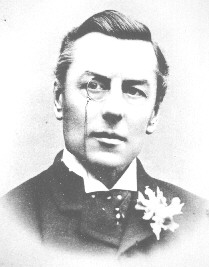
In one more memorable phrase, Winston Churchill described Joe Chamberlain as the politician who “made the weather”.   Of course in the past generation it has been Nigel Farage and UKIP who have made the weather, preparing the ground for our new pro-Brexit consensus.   But in his own time, more than a century ago, Joe Chamberlain was a phenomenon.   The industrialist mayor of Birmingham who became an MP and then entered the Cabinet started as a reforming Liberal, then split with his party over Irish Home Rule to create the Liberal Unionists before allying himself with the Conservatives, in the process creating the Conservative and Unionist Party.   His obsessions were social reform, the improvement of the lot of working class people, the Union of Great Britain and the global English-speaking Empire, now the Commonwealth.   And where all this matters is that Nick Timothy, Theresa May’s Chief of Staff and literally the most powerful man in the country, sees Joe Chamberlain as his inspiration for the direction in which Britain is now travelling.
Nick Timothy himself comes from Birmingham, where his father was a steelworker.   He went to grammar school there and then on to Sheffield University.   In time he became director of the New Schools Network and a special adviser to Theresa May at the Home Office.   Her confidence in him is absolute.   “Our Joe”, Nick Timothy’s biography of Chamberlain, tells of his ambitious improvements in Birmingham’s education, housing and social services while mayor there.   He tells how on Chamberlain’s 70th birthday in 1906 thousands of ordinary Brummies followed a cavalcade through the city to celebrate his achievements.   And on 14th June this year, 9 days before the Referendum, Nick Timothy declared, “I have strongly held views about Europe.   I have already voted to leave the EU, I think we should withdraw from the European Convention on Human Rights...”   Four months later he is at the centre of government, directing events from Downing Street, so Brexit will almost certainly be for real.
Now what does all this mean for UKIP?   What is remarkable is that Paul Nuttall, MEP for North-West England and until recently our Deputy Leader, is like Nick Timothy also a specialist in Joe Chamberlain’s Edwardian politics, which he studied at Liverpool Hope University.   Later, he went on to lecture at the University, joining UKIP in 2004.   So Paul has a fine academic mind as well as a broad historical vision.   And I recall a conversation with him some years ago when he declared that UKIP was really the old Liberal Unionist Party of Joe Chamberlain adapted for the new age which could become the voice of the patriotic Midland and Northern working class.   So he and Nick Timothy were working towards the same insight, which was extraordinarily prophetic when Jeremy Corbyn’s Labour Party would soon disenfranchise millions of loyal Labour voters.   Some could move to the Conservatives, but for most this will simply be a step too far.   Yet there is a home for these millions of Labour voters in a revitalised UKIP.   We won almost 4 million votes at the last General Election and can win millions more at the next under our new leader.   In Paul Nuttall’s own words, “There is definitely a future for a patriotic voice of the working class, and people aren’t getting that from Labour under Corbyn – that is where UKIP becomes relevant.”   And to underscore this point, there was an election the other day in the Headland and Harbour Ward of Hartlepool Borough Council.   Here is the result:
Tim Fleming (UKIP) – 496 votes (49.16%)
Trevor Rogan (Labour) – 255 votes (25.27%)
Steve Latimer (Putting Hartlepool First) – 155 votes (15.36%)
Benjamin Marshall (Conservative) – 41 votes (4.06%)
John Price (Patients Not Profits) – 36 votes (3.57%)
Chris Broadbent (Independent) – 26 votes (2.58%)
So, like Joe Chamberlain, Nigel Farage’s UKIP has made the weather.   Theresa May and Nick Timothy are wisely following.   Now we have to win elections and the Hartlepool Borough Council result is a small sign of just what is possible.  So for UKIP, despite our great Referendum achievement and its turbulent aftermath, the best may be yet to come!
Until next Tuesday!
Toby

Monday, 10 October 2016

Toby on Tuesday
'Whose Policy?...'


“Just listen to the way a lot of politicians talk about the public.   They find your patriotism distasteful, your concerns about immigration parochial, your views about crime illiberal, your attachment to your job security inconvenient.   They find the fact that more than seventeen million voters decided to leave the European Union simply bewildering.”   No, that wasn’t Nigel Farage speaking.   It was the Prime Minister, Theresa May, addressing last week’s Conservative Party Conference.   And the truth is that the new Government has purloined not just great chunks of our General Election manifesto - on the EU, on taking the low-paid out of tax, on grammar schools and much more - but has even purloined our actual language too.   It seems extraordinary that the country has, within just four months, rejected the Blairite settlement of the past 20 years and finds itself with what is really its very first UKIP Government.
   
Of course that is what makes politics endlessly fascinating, but it does leave old UKIP with a serious challenge, not just the challenge of finding a new leader who can restore confidence to the Party, but who can also create a new identity, a kind of NewKIP.   It’s that new identity, which can retain the loyalty of the nearly 4 million voters who supported us at the General Election and add millions more, on which everything depends.
And here it’s worth a visit to the online journal HeatStreet for an article by the bookies’ favourite to succeed Diane James as UKIP’s new leader, Steven Woolfe, on http://heatst.com/world/steven-woolfe-mep-why-ukip-is-the-official-opposition-now/  In this Steven writes, “....There are other areas of domestic policy which Theresa May is now talking about where UKIP has driven the agenda for some time.   The coalition government took the minimum wage out of tax altogether – this was a UKIP policy.   Increasing the defence budget to 2% of GDP, in line with NATO guidelines, was also a UKIP policy.   And only this week at the Conservative Party Conference, the Government announced a new scheme to build thousands more homes on brownfield sites – which was in our last manifesto   
On Sunday, Theresa May hinted at a possible bill to reform the House of Lords – something of which I am personally supportive...I hope the Prime Minister lives up to expectations and delivers on her promises, especially on Brexit and immigration controls.   There is still much to achieve in this post-Brexit world.   We in UKIP will continue to take a pragmatic view to everyday politics – we will continue to fight for what we believe in, but we will oppose and support the Government where necessary – to build a happier, more confident UK.”
So there you can see some of the ideas which will shape the new UKIP.   There is an immense amount of work to do as UKIP shapes its identity for the coming post-Brexit world.   But what is so marvellous is that politicians can even start to talk in these terms.   The days of Ministers being at the mercy of EU Directives and the so-called European Court of Justice are drawing to a close, which is the great liberation of our time.   And the extent of our escape becomes clearer as the whole EU project sinks deeper into the abyss.   Of course it existed primarily for the benefit of German industry and the German banks.   But where the British and US banks recapitalised and restructured themselves after the banking crisis, the German banks failed to do so.   
Of the two largest banks, DeutscheBank is now struggling with a $14 billion misselling fine imposed by the US Justice Department which could wipe out its remaining reserves, while Commerzbank is laying off 10,000 staff and suspending dividend payments.   And to think that Britain’s Euromaniacs saw the German economy as a role model into which we would need to integrate our own.   By a miracle the British people chose in June to avoid that fate and thus escaped disaster.   So in this post-Referendum world, in which we have what is in essence a UKIP Government, a kind of NewKIP will have a vital role to play under new leadership.   It will not be easy, but our journey has never been easy and we will make as great a contribution to Britain’s public life in future as we have in the past generation!
Until next Tuesday!
Toby
Thursday, 6 October 2016

Toby on Tuesday
'Democracy Dismissed'

As the new Brexit consensus unfolds, the time has finally come to ditch the old political descriptions of 'left' and 'right'.   The world of Clarke, Kinnock and Heseltine, Miliband, Clegg and Cameron could have been a century ago for all the relevance it has to the new post-Referendum settlement, yet we continue to use language that no longer reflects the culture in which we now live.  In fact the descriptions 'left' and 'right' first appeared during the French Revolution of 1789, when those National Assembly members who supported the old French monarchy sat on the president's right and those who supported the Revolution sat on his left.   So during all the subsequent phases of the Revolution the supporters of the status quo remained on the right and their opponents stayed on the left.   We all know that the Revolution degenerated into the Terror and the guillotine, the Committee of Public Safety, then Napoleon's military dictatorship and his failed attempt to conquer Europe.   But the pattern for future revolutions was set, with the ordinary people in whose name all those uprisings took place being ignored as the leaders' frenzied thirst for power unfolded.   

Today, those who still support Britain's membership of the EU are in precisely the same position as the courtiers of the old Bourbon monarchy, hankering after their extraordinary privileges which the public mood has decided must now be brought to an end.   They have colonised the BBC and much of the media, the House of Lords and great parts of our so-called "Establishment" and they see themselves as 'progressives' or 'centrists' or of the left, yet they are as imbued with the same spirit of entitled privilege as all those who sat on the right of the president in France's revolutionary Assembly.   So are the Kinnocks and Cleggs, the Clarkes and the Milibands of the left or of the right?   The truth is that the descriptions are meaningless and instead the true division is between those who now want our country to be a self-governing democracy again and those who do not.

Among those who see themselves as pro-EU centrists, none has been more vocal during his long career than Ken Clarke.  From the days when, while studying at Cambridge, he invited Sir Oswald Mosley of first the British Union of Fascists and later of the "Europe a Nation" movement to address the students, he has been relentless in his support for the whole crazy EU project.   

And in this week's "New Statesman" he gives an idea of the trouble that he and his friends are cooking up for the Prime Minister as she seeks to ensure that Brexit actually happens.   He describes her as a "bloody difficult woman" presiding over a "government with no policies".   He goes on to say, "Nobody in the government has the first idea of what they're going to do next on the Brexit front."    Dismissing the Referendum result as a "bizarre protest vote" he confirms that he will vote against its result saying, "The idea that I'm suddenly going to change my lifelong opinions about the national interest and regard myself as instructed to vote in parliament on the basis of an opinion poll is laughable."   And then he illustrates all-too clearly why the old language of politics no longer works for he says, "I don't want us to go lurching to the right.   There is a tendency for traditional parties to polarise, and for the right wing one to go ever more to the right, and the left-wing one to go ever more to the left." Yet what is right-wing about accepting the democratic vote of a clear majority of the electorate?   And what is centrist or left-wing about blatantly promising to ignore it?  The truth is that the old language no longer works and the Ken Clarkes of this world have just the same haughty and dismissive sense of entitlement as Louis XVI's courtiers.

So in the new settlement, the divide will not be between 'left' and' right', but between democrats and anti-democrats.   And there are far too many anti-democrats in all parties, not least in Labour and the LibDems.   The Conservative party definitely has its own ranks of anti-democrats who are already on manoeuvres to thwart Brexit.   Ken Clarke has now broken cover in the Commons, as has Michael Heseltine in the Lords.    There is trouble ahead from the ideologues like Anna Soubry and the disappointed like George Osborne.   And with a wafer-thin Government majority Brexit's passage will be far from smooth.   And what of UKIP?   Of course we will support Brexit at every stage.   And are we of the 'left' or of the 'right'?  The answer is neither.   We are determined democrats, working to restore self-government to the people of our country.   The old language no longer works. Rather, we are committed at every stage under our new leader to uphold the well-being and prosperity of the British people.   That is our pledge and nothing, least of all the attempts of a failed political class that has caused untold damage while claiming immense privileges for itself, will stand in our way as we work to achieve our goal!

Until next Tuesday!
Toby 

Monday, 26 September 2016

Toby on Tuesday
'Part And Parcel...'

Last Friday night, BBC Radio 4’s Any Questions? came from Pickering’s Kirk Theatre.   On the panel were Shami Chakrabarti, or Baroness Chakrabarti of Kennington as she is now after Jeremy Corbyn’s recent act of patronage, Tim Farron of the LibDems, Conservative Brexiteer Harsimrat Kaur and former Conservative Remainer but now Policing and Fire Services Minister and Brexiteer Brandon Lewis.   Our own, excellent in-house economist Rex Negus managed to ask a sensible question about the need for an effective opposition, but amid all the humbug and posturing it was funnily enough Tim Farron who made the one really salient point of the evening.  What he said was that any Brexit deal would ultimately be a stitch-up between civil servants in Whitehall, Berlin, Brussels and Paris.  He claimed this as a good reason for a second referendum, a claim that was wholly spurious, but his insight that the fingerprints of the bureaucrats would be all over the final deal was probably correct.
This is one principal reason why UKIP will be needed as much as ever during the coming years.   The other principal reason is that traditional, patriotic Labour voters, horrified by the direction their party is taking under Jeremy Corbyn, will need a new home.   They may never be able to bring themselves to vote Conservative, but a revitalised UKIP, committed to secure borders, strengthened defences and the restoration of so many of our industries, not least our fisheries, would be a compelling home for millions of forgotten voters.   Certainly the party of Jeremy Corbyn and Sadiq Khan, Labour Mayor of London, who recently declared that “living with terror attacks is part and parcel of living in a big city” no longer inspires any confidence, to put it mildly.
What does inspire confidence is the new UKIP, under the leadership of Diane James.   And what is reassuring is that Steven Woolfe, the charismatic North-West MEP who was unable to enter the leadership election himself, has just written a fine piece for the online publication HeatStreet (http://heatst.com/world/steven-woolfe-mep-ukips-future-is-bright-with-diane-james-as-leader) which is well worth reading in full.   What Steven says is that, “On Friday Nigel Farage, one of the nations’s most influential and effective politicians, stood on the platform at the UKIP conference and gave his last speech as leader...Moments later UKIP’s new chief, Diane James, took the stage as the party’s first female leader...Diane has a vision.   She is absolutely right to say that in the short term, UKIP must remain a loud and relevant voice in ensuring that Britain gets the best deal from leaving the European Union.   It was clear that Britain must take full control of its borders and reduce net migration.   It was clear that Britain must not continue to pay into the EU budget...” and much more.   
In essence what Steven, like Diane, is saying is that Brexit really must mean Brexit and a cosy stitch-up between civil servants will be good neither for Britain nor for the EU.   Brexit can be the catalyst for fundamental reform across the EU and a botched agreement will do no good to anyone.   But the real point is that Steven, with his strong Northern base in Labour’s heartlands is the perfect foil for Diane with her impeccable roots in the Conservative South.   Together they can reinforce UKIP’s role as the truly national party and his fine HeatStreet article is the starting point for a reunited UKIP in which all regions and all political backgrounds can find a home.  So let’s hope that in the new, strengthened UKIP there will be a major role for Steven.   And do please find time to read his splendid HeatStreet article.
But to return to Labour and its London Mayor’s claim that living with terror attacks was the new norm in big cities, we have to ask ourselves what steps we can take to eliminate as far as possible the many dangers that our country faces.  We know the source to be a virulent form of fundamentalism called wahhabism, onto which young men in particular have latched to provide them with a sense of narcissistic power.   We know that much of its funding has come from Saudi Arabia.   We know that it has infiltrated far too much of our own country.   And we know that, unless we can obtain complete control of our borders, the virus will only develop.   So to those who say that, with Brexit, UKIP’s work is done, I would reply that it has only just begun.   The Brexit negotiations will be complex, challenging and could easily divide our political system once more, yet the security of our country is paramount and cosy deals cooked up by civil servants will just not work, however plausible they look on the surface.   So UKIP, with new leadership from Diane James, hopefully from Steven Woolfe, and from many more will serve our country well in the years ahead, and could come to replace a Labour party that no longer resonates in its Northern heartlands as the true opposition!
Until next Tuesday!
Toby

Tuesday, 20 September 2016

Toby on Tuesday
'Celestial Bodies' 
For this week, three events to put a smile on the face of every UKIPper.
First, the leadership.   As leader of UKIP, indeed as the most influential political figure of the past generation, Nigel Farage was a meteor, in fact a fireball, in the political firmament.   As he hurtled through Eurospace, he left behind a trail of light, sometimes heat, and sometimes the charred remnants of those – from our former Prime Minister down - who unwisely found themselves in his path.   And without him, Britain would never have escaped the fatal trap or prison that is the European Union.    Our country owes him an immense debt that history will recognise more and more as the EU disintegrates.  By contrast, our new leader, Diane James, has the potential to become our Pole Star, our North Star, the constant around whom UKIP’s different elements can chart their course.   Stable, reliable and intelligent, she is precisely what the Party now needs and a sure guide to electoral success in the years ahead.   So it is vital for all our gifted, independent-minded UKIPpers to rally round Diane as the next stage of our journey unfolds.   She will certainly have the total support of all UKIPpers here in Yorkshire.
Next, the paralympics.   The figures speak for themselves – we can all interpret them as we wish, but they are simply humbling:
                                   Gold                 Silver                 Bronze                Total
1.  CHINA                    107                     81                       51                    239
2.  GB                           64                      39                       44                    147
3.  UKR                         41                      37                       39                    117
4.  US                            40                      44                       31                    115
5.  AUS                         22                      30                       29                     81
(figures correct as of 14:10 19/09/16)
Finally, an update on how the EU is finally descending into pure farce.   Our press has not really been reporting the latest spat between Jean-Claude Juncker, President of the European Commission, and his predecessor, Jose Manuel Barroso.   Now Barroso first rose up via Portugal’s politics as a leader of the Maoist MRPP (Reorganising Movement of the Proletarian Party) before reaching the top of the EU, which he welcomed as a new European Empire – with Britain a mere colony of course.   In classic Blairite form, on his retirement in 2014 he decided to line his pockets as quickly as possible and was recently appointed Chairman of Goldman Sachs International.   This has caused a perfect storm within the European Commission, with Jean-Claude Juncker declaring, “Goldman Sachs was one of the organisations that...contributed to the enormous financial crisis we had between 2007 and 2009.   So one does wonder about the particular bank he has ended up working for.”   And EU staff have called the former Maoist’s behaviour “morally reprehensible.”   Indeed, one group of staff has launched a petition calling on him to forfeit his pension for bringing the EU into disrepute, a petition which has now received nearly 150,000 signatures.   So here is just one more example of why we must quit this rotten institution as soon as possible, bringing our soaring subsidies to an end.   And a revitalised UKIP under Diane James’ leadership – with Nigel Farage cheering her on in the background – will ensure that this is precisely what happens, so that Brexit really does mean Brexit!
Until next Tuesday!

Thursday, 15 September 2016


 Toby on Tuesday
'Ideals and Ideologies'


As the years pass, the labels “left” and “right” seem to matter less and less.   Instead, the world appears to be divided between the ideologues and the empiricists – those who believe in an ideology, to which facts need to be bent, and those who believe in studying the evidence before forming a judgment.   European fascism and communism were once ideologies, just as the EU is now.   Britain was spared the twin evils of fascism and communism and, by a miracle and thanks to the Eurosceptic movement in the past generation, is now being spared the ideology of the EU.   Joseph Stiglitz, Professor of Economics at America’s Columbia Business School, chairman of President Clinton’s Council of Economic Advisers from 1995-1997, chief economist at the World Bank from 1997-2000 and winner of the Nobel Prize for Economics in 2001, has traditionally been seen as a figure of the left.   He has advised the Scottish government on independence, the Syriza government in Greece and briefly even sat on Jeremy Corbyn’s economic advisory panel.   But in his new book “The Euro and its Threat to the Future of Europe” he endorses everything that UKIP members have been saying about the EU for a generation now.   In his own words:

“There have been other things that Europe got wrong, but monetary union was the overarching macroeconomic mistake.   We can see this most clearly in the fact that some countries not in the euro but with the same regulatory framework, such as the UK and Sweden, did much better”...”The way the club was politically organised gave all the power to Germany and the way that Germany was exercising that power was economically wrong and politically insensitive”...”Money moves from weak countries to strong countries.   You make it easier for money to move out of Greece, out of Spain and out of Italy.   And where are they going to move?   They move to Germany.   So you create a system where when you get the shock, the weak grow weaker and the strong grow stronger”...”Germany takes the view that we are not a transfer union and we won’t even take the risk of a banking union”...”They have rewritten their history.   It wasn’t hyperinflation that led to Hitler, it was unemployment.   And if they’d listened to their own story they would not have allowed what they forced in Greece, which is 25pc unemployment and 50pc youth joblessness”...”Juncker’s response after the Brexit vote was this very hostile one, we’re going to punish anyone who leaves.   And to me that was a shocking statement.   It was saying the reason people are going to stay in the EU is not because they believe in the benefits but because of fear of leaving.   That’s a strange statement from the President.”   In short, Joseph Stiglitz says that the EU project in its current form has no future.

Now compare this with EFTA (European Free Trade Association) about which I have written so often in the past.   Based in Geneva and formed by inspired British civil servants in 1960 as an alternative to the EU’s predecessors, it now has just four members, Iceland, Liechtenstein, Norway and Switzerland.   Each one has its own particular trading relationship with the EU but, and this is so remarkable, EFTA has established preferential trade relations with 24 non-EU countries, including Canada, Hong Kong and Mexico.   And negotiations are underway with eight more countries including India and Russia.   When Britain’s so-called “Establishment” simply caved in under Ted Heath and left EFTA for what is now the EU, we turned our backs on a unique organisation based on democracy and open trade for a flawed and anti-democratic ideology based on a great deception.    But post-Brexit this can be put right.   The President of Switzerland, Johann Schneider-Amman, has already told reporters that Britain’s return to EFTA after nearly 45 years would “strengthen the Association.”   Alongside the renewal of our UN and WTO roles, the restoration of our EFTA ties is one more step in the recovery of our country.   In fact, thinking about it and in the light of Joseph Stiglitz’ new book, the best thing that the member states of the EU could all do now would be to leave that toxic institution and apply individually for EFTA membership!    EUexit for the whole of Europe, with the restoration of national currencies and the end of Schengen could just be the best way to save a once-great Continent!

Until next Tuesday!

Toby